
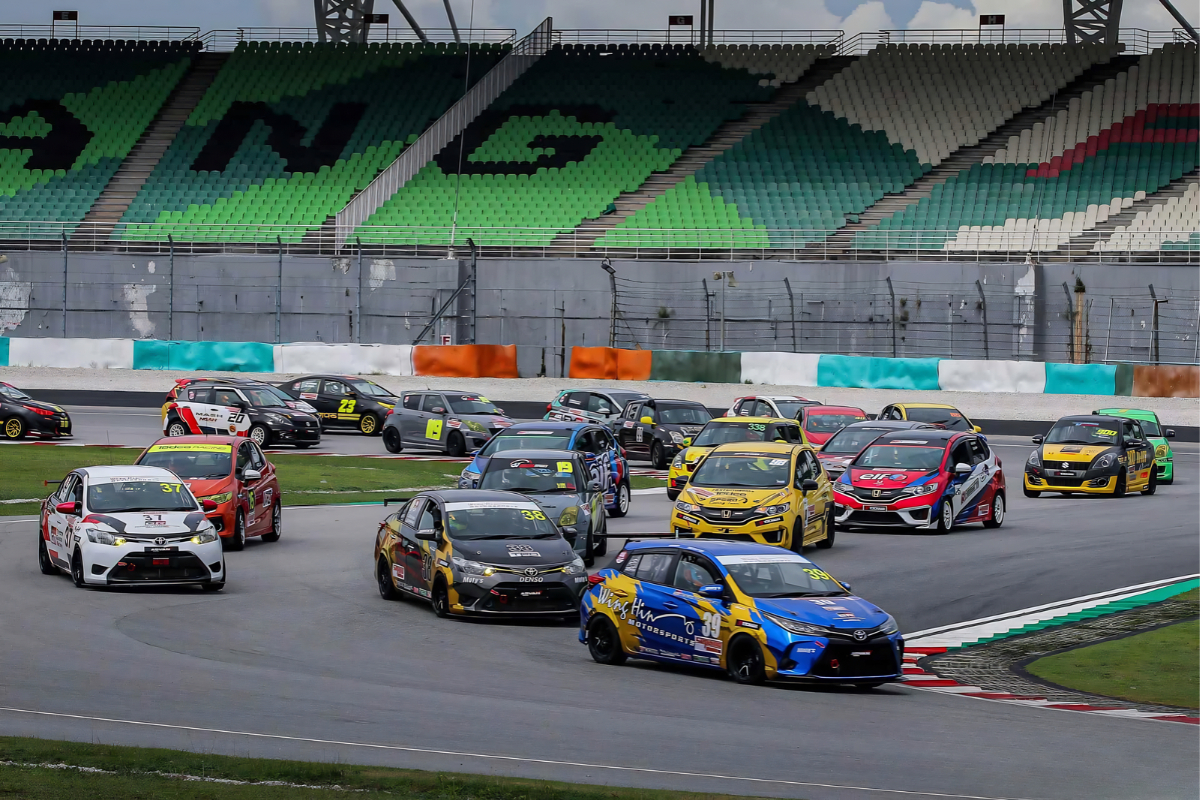
Sepang 1000KM Endurance Race Returns as Malaysia's Premier Endurance Challenge
Malaysia's endurance racing scene is set for another major challenge as the Sepang 1000KM Endurance Race (S1K) returns to PETRONAS Sepang International Circuit for its 2026 edition.
Recognised as one of the country's established endurance racing events, S1K brings together local and international competitors for a demanding 1,000-kilometre contest that tests driver consistency, team coordination, mechanical reliability and strategic decision-making.
Organised by PETRONAS Sepang International Circuit (SIC), with support from the Ministry of Youth and Sports Malaysia (KBS) and sanctioning from the Motorsports Association of Malaysia (MAM), the event also serves as the finale of the circuit's national championship racing calendar.
A Nine-Hour Test of Endurance and Reliability
Unlike conventional sprint races, the Sepang 1000KM is built around endurance, with competitors required to manage their machinery and resources over an extended period.
The 2026 event is expected to cover approximately 172 laps of the 5.543-kilometre Sepang International Circuit, equivalent to around 1,000 kilometres of racing.
The competition typically runs for approximately nine hours, making it a demanding test for both drivers and their respective teams.
Driver changes, pit-stop execution, fuel management, tyre conservation and mechanical reliability all play important roles in determining the final outcome.
Teams must also adapt to changing track conditions throughout the race, with traffic management and consistent lap times becoming increasingly important as fatigue sets in.
A strong qualifying performance can provide an advantage, but success over the full distance ultimately depends on maintaining a competitive pace while avoiding costly mistakes and mechanical setbacks.
A Platform for Malaysia's Motorsport Talent
Since its introduction in 2009, the Sepang 1000KM has developed into an important platform for Malaysian circuit racing.
Originally established for production-based cars below 1,600cc, the competition has evolved over the years to accommodate different classes and a wider range of competitors.
The event has also provided opportunities for emerging Malaysian drivers to gain valuable endurance racing experience before progressing towards more competitive regional and international championships.
Several established names in Malaysian motorsport have previously competed in S1K, including Keifli Othman, Faidzil Alang, Tengku Djan and Fariqe Hairuman.
The event has also featured younger talents such as Mitchell Cheah, Hayden Haikal, Putera Adam and Naquib Azlan, highlighting its role in developing the next generation of Malaysian racing drivers.
Beyond the competition itself, S1K provides teams with an opportunity to develop their technical capabilities, improve race operations and gain experience in multi-driver endurance racing.
International Participation Adds to the Competition
While Malaysian teams remain central to the event, the Sepang 1000KM has also attracted international participation from neighbouring countries and beyond.
Competitors from countries including Australia and Japan have previously taken part, contributing to the event's growing regional profile.
The international presence adds another dimension to the competition, bringing together different racing backgrounds, engineering approaches and team strategies.
For overseas competitors, the event offers an opportunity to experience Malaysian motorsport while competing at one of Southeast Asia's most established racing facilities.
The combination of local talent and international participation continues to strengthen S1K's position within the regional endurance racing calendar.
Sepang International Circuit Set for Another Endurance Showdown
The Sepang International Circuit provides a challenging environment for endurance racing, combining long straights, heavy braking zones and technical corners that place considerable demands on both drivers and machinery.
Its 5.543-kilometre layout also presents several opportunities for overtaking, particularly along the main straight and into the circuit's major braking zones.
However, completing approximately 172 laps requires more than outright speed.
Teams must balance performance with reliability, ensuring their cars remain competitive throughout the race while managing the demands placed on engines, brakes, tyres and other mechanical components.
A single mechanical issue or poorly executed pit stop can significantly affect a team's overall position, making operational consistency just as important as on-track performance.
S1K Continues to Anchor Malaysia's National Racing Calendar
As the concluding event of PETRONAS Sepang International Circuit's national championship calendar, the Sepang 1000KM holds an important position in Malaysia's motorsport landscape.
Its combination of endurance competition, domestic talent development and international participation provides a fitting conclusion to another year of racing at Sepang.
With teams preparing for the demands of the 1,000-kilometre challenge, the 2026 edition will once again place reliability, teamwork and race strategy at the centre of the competition.
For Malaysian motorsport fans, S1K remains an important opportunity to witness local and international competitors tackle one of the country's most demanding racing events.